Spinal fusion permanently connects two or more vertebrae to eliminate painful motion, restore stability, and relieve nerve compression. Dr. Cho believes fusion should only be recommended when conservative treatments have been exhausted and the evidence clearly supports it.
Having evaluated patients who underwent extensive multi-level fusions that may not have been necessary, Dr. Cho’s approach is measured and evidence-based: fuse only what needs to be fused, preserve motion where possible, and have a transparent discussion about risks, benefits, and long-term implications.

A spacer and plate are placed after disc removal. The anterior approach avoids cutting posterior neck muscles, resulting in less post-op pain.
The gold standard for cervical disc herniations and cervical myelopathy. The damaged disc is removed from a small incision in the front of the neck, and the vertebrae are fused — avoiding disruption to the posterior neck muscles entirely.
A posterior approach to lumbar fusion that accesses the disc space from one side, minimizing nerve retraction. Performed using MIS techniques when appropriate (MIS-TLIF).
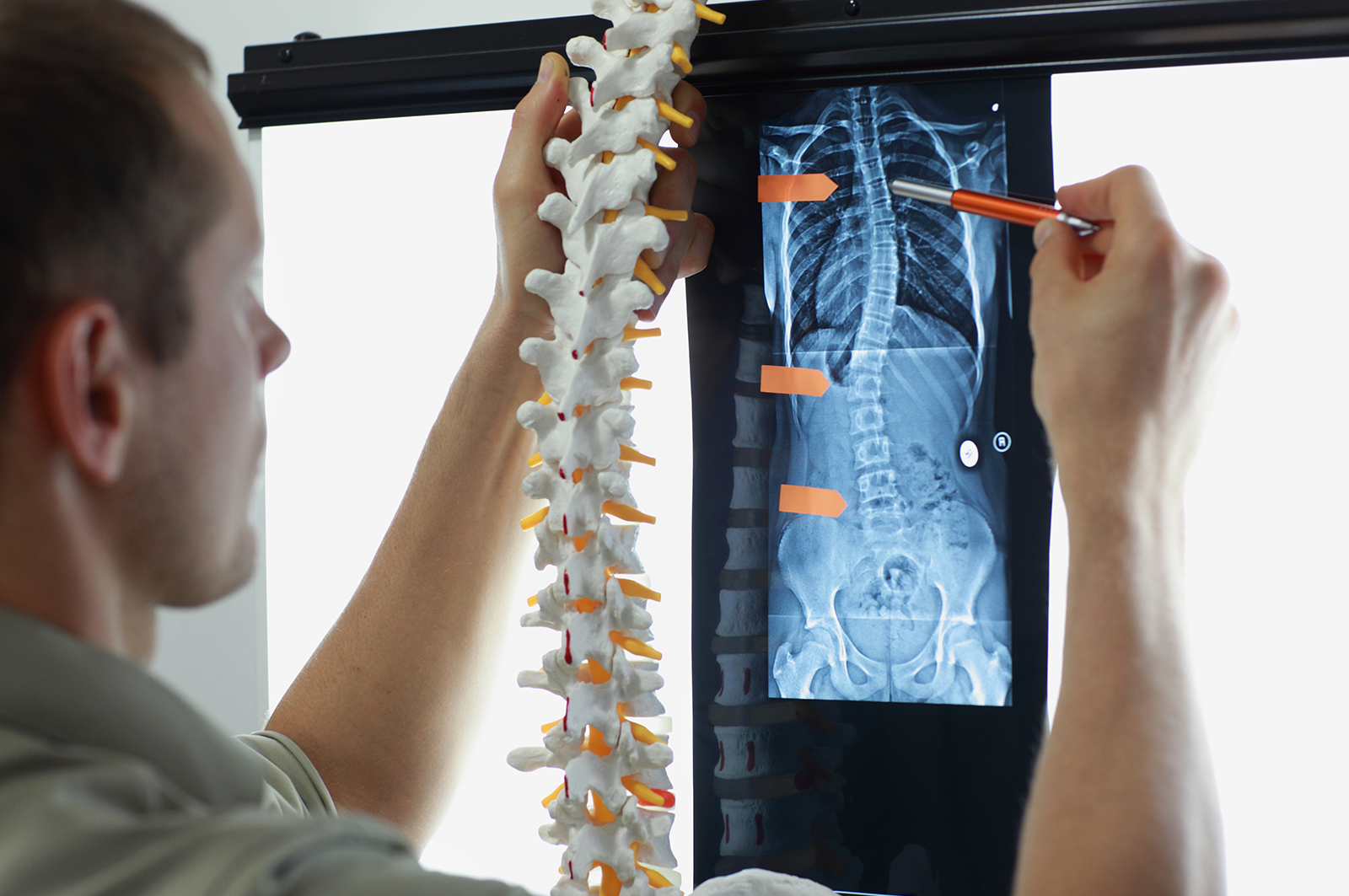
Pedicle screws are placed above and below the affected disc. The disc is removed through an angled approach, and a spacer with bone graft is inserted. Rods connect the screws to maintain stability during fusion. Hospital stay typically 1–2 nights.
Approaches the lumbar spine from the front through a small abdominal incision, allowing excellent disc space restoration without disturbing the back muscles.
Approaches the lumbar spine directly from the side, traversing the psoas muscle to access the disc space. Particularly effective for upper lumbar or thoracolumbar conditions and multi-level treatment.

With the patient on their side, the psoas muscle is traversed using real-time neuromonitoring to protect nerves. The damaged disc is removed and an expansive cage placed. Supplemental posterior fixation added as needed. Hospital stay typically 1–2 nights.
Approaches the lumbar spine through an oblique corridor, avoiding both the back muscles and the psoas muscle. Effective for multi-level disease and alignment correction.